Key things to know
Jerky and biltong have been keeping people fed through difficult conditions for centuries, which makes them a logical addition to any emergency food supply. This post covers why dried meat excels as a survival or preparedness food: long shelf life, high protein content, no refrigeration, no cooking required, and genuine portability. The key takeaway: the same qualities that make jerky and biltong great everyday snacks make them even better when you actually need them.
Do you believe humanity’s day of reckoning will come? Is Doomsday a factor in the way you live your life?
Whether your views have been informed by your religious beliefs, climate change, the behaviours of the world’s population or anything else, if you believe that a monumental calamity is going to happen one day, then you’ve probably already considered your survival strategy.
Non-perishable food is obviously your number one priority. You want things that have a long shelf life, that won’t spoil, which don’t need refrigeration or heating up, which are easy to eat and which are also readily transportable.
OK, so you’ve got dehydrated meals and tins of food (don’t forget to pack a manual can opener), but have you thought about snacks? Here’s why biltong and jerky should be on your list of supplies.
There’s a reason why jerky and biltong can be traced back centuries. Lots of reasons in fact.
Way back in the ‘olden days’ when nomadic tribes lived off the land and pioneers ventured far into the great unknown to reach new frontiers, they discovered that dried meat lasted for months without spoiling. The meat was not only rich in protein and very nutritious, it was also robust and portable and they could make it in large quantities.
Biltong has its origins in South Africa while jerky can be traced back to native tribes in Central America and despite the fact that they date back over 400 years, their traditional methods and recipes are largely unchanged today.
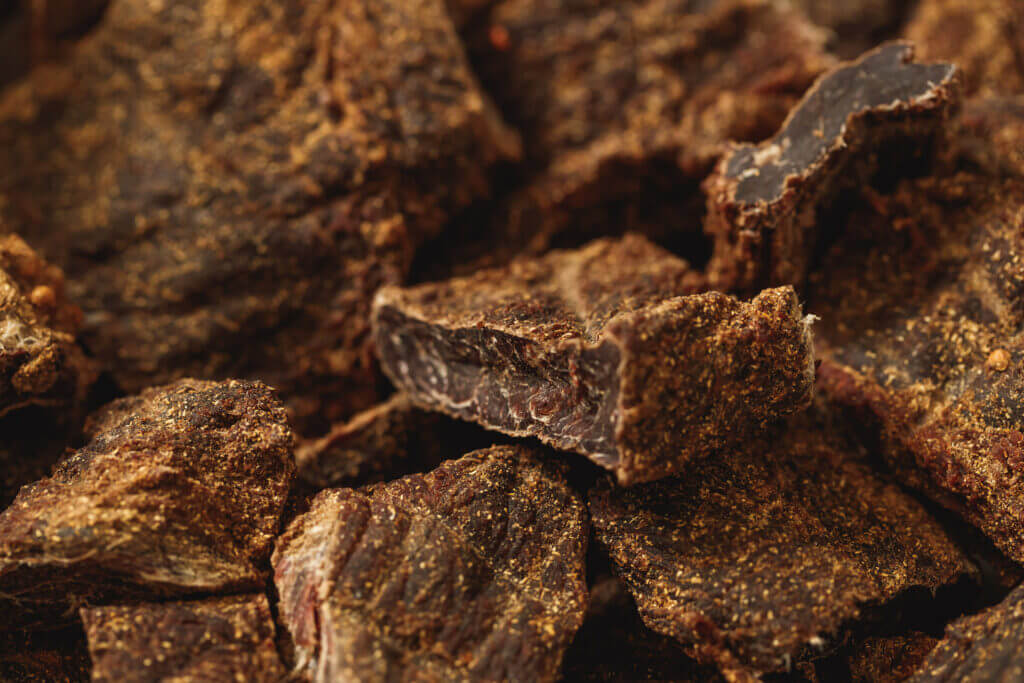
Biltong and jerky don’t rot because of their curing and preservation process. The meat is first cured using a mixture of vinegar, salt and spices which add flavour as well as inhibit bacterial growth and is then dried. Biltong is air-dried whilst jerky is dried using a heat source.
In an emergency, you need food that is easily accessible, nutritious and durable. Jerky and biltong tick all of those boxes and some.
Here’s why these dried meat snacks would make a great addition to any emergency supply pack:
This article on why beef jerky is so good for you gives you more info on the nutritional benefits of these healthy meaty treats.
Let’s not forget why biltong and jerky are so popular. Yes, they’re a great convenience snack and are right up there in terms of nutrition, durability and portability, but it’s their moreish savoury tastiness that have made them firm favourites the world over.
So if you’re looking to beef up your emergency pack ahead of Doomsday, make sure you add some delicious jerky and biltong. DJays Gourmet is home to Australia’s best beef biltong and jerky and we deliver countrywide, so order online and we promise it won’t be long before your meaty treats are at your front door. You can then pop them in your prep pack for the day of reckoning – if you can resist munching on them that is!
Commercially produced beef jerky typically has a shelf life of around 1–2 years when stored in a sealed package in a cool, dry location. Once opened, it’s best consumed within a few days to a week. For emergency supplies, keep packs sealed and stored away from heat and direct light.
It’s one of the better options. Jerky is lightweight, calorie-dense relative to its size, doesn’t require refrigeration, and needs no cooking or preparation. It’s also high in protein, which matters if you’re rationing other foods. The long shelf life, typically 1–2 years commercially, makes it practical to stockpile and rotate.
Biltong’s shelf life varies by moisture level. Dry biltong lasts longer than moist biltong because lower moisture content inhibits bacterial growth. Commercially packaged dry biltong can last several months to over a year in sealed, cool conditions. For long-term emergency storage, dry biltong is the better choice.
Humans have preserved meat through drying for thousands of years precisely because it works so well. Removing moisture inhibits the bacterial growth that causes spoilage, leaving a food that’s calorie-dense, protein-rich, lightweight and stable at room temperature. No fuel needed to cook it, no utensils required to eat it.
Beef jerky provides protein, iron and B vitamins, nutrients that matter for maintaining energy and physical function during stressful situations. It’s not a complete nutritional source on its own, but as part of a broader emergency food supply alongside carbohydrate staples and other shelf-stable foods, it fills an important protein gap.

Arron Zamel has been General Manager of DJays Gourmet since 2015 and under his expert leadership, the company has cemented its reputation as Australia’s leading supplier of packaged jerky and biltong.
His strong family connection to South Africa, his marketing and management degree from Monash University, his technical expertise plus his experience as a successful entrepreneur and import/export business owner made him the ideal candidate for the challenging position.
Additionally, Arron’s innovative approach to management, his proven brand-building credentials, his strong customer focus and youthful energy have ensured that DJays Gourmet’s high-quality biltong and jerky have become Australia's dried meat treats of choice.
He understands traditional South African flavours and the precision techniques required to create truly authentic biltong, jerky and droewors (dried sausage). Part of his job is overseeing operations at DJays' purpose-built facility in Perth, WA where tons of Australian beef goes into making premium dried meat products each month for distribution to retail and wholesale customers across Australia.
For more insights into Arron’s world, visit the DJays Gourmet website, check out their Facebook page or follow them on Instagram @djaysgourmet.
* Terms & Conditions
Sale excludes sale items and other discount coupons. Sale ends midnight 10 May 2025.
© Copyright 2026 D.Jays Gourmet. All Rights Reserved | ABN 14 103 055 296 | Privacy Policy