Key things to know
Biltong and jerky look similar on the surface, but the textures are genuinely different, and the reason comes down to how each is made. This guide explains why biltong (air-dried, cured in salt and vinegar) tends to be more tender and steak-like, while jerky (marinated and heat-dried) comes out firmer and chewier. It also breaks down the texture spectrum within biltong itself, from the soft, pink interior of moist biltong through to the crunch of snapsticks, so you know what to expect before you order.
Have you ever wondered why biltong and jerky don’t have the same texture?
This detailed guide explores the distinctive mouthfeel of these two protein-rich snacks and explains the key factors behind their differing textures and unique sensory experience. It also unpacks the textural differences between the various types of biltong including moist biltong, medium dry biltong, dry biltong and snapsticks.
By the way, if you intend trying out these meaty treats for the first time, don’t settle for ordinary. Power up your maiden voyage with Australia’s best biltong and jerky from DJays Gourmet and taste heaven in your first bite!
The texture of biltong and jerky vary as a result of their different:
As a general rule, biltong has a more tender texture whilst jerky tends to be firmer and chewier.
Let’s first look at how the production methods differ and how these affect the mouthfeel of the two products.
Jerky is made by first cutting meat into thin strips, then marinating and drying the strips in a low temperature oven or dehydrator. The drying process is relatively short.
Biltong is made by curing larger chunks of meat in a blend of spices, salt and vinegar and then hanging these out to air dry naturally over an extended period of time. This process gives the chunks a slightly dry exterior while allowing varying degrees of internal moisture depending on the type of biltong being made – eg soft and tender to completely dry.
Basically, the main factor contributing to the textural differences between the two is that jerky is ‘cooked’ or smoked whereas biltong is cured and dried naturally. The heat involved in jerky production also alters the structure of the meat, making it more chewy, drier and tougher whereas air-dried biltong tends to have a richer, more steak-like texture.
The thin strips of jerky result in a product that is chewy and a bit crispier and tougher. The cooking or smoking process over heat can also result in some caramelisation of the jerky strips, leading to an extra chewy mouthfeel. Jerky slices are also generally uniformly thin in size, which makes for a more consistent texture.
On the other hand, the larger chunks of meat used to make biltong and the slower, natural dehydration process allows for greater variations in texture and moistness. Adjusting the drying time also allows manufacturers (or you if you’re making your own biltong) to customise the texture of the meat.
The chunks are also sliced into strips after drying which allows for variable thickness and therefore texture.
Each manufacturer has their own way of making jerky and biltong s well as their own special recipes and spice mixes, which means that no two brands are the same. Our suggestion is to order beef biltong and jerky online from DJays Gourmet and try the two side-by-side if you’re really curious about discovering how the two differ in texture.
Jerky and biltong are made using vastly different ingredients.
Jerky strips are marinated in a variety of mixtures which often include sugar, soy sauce, honey and various seasonings and these play a role in the chewy texture of jerky. As mentioned earlier, the sweet elements of the marinades can also create a lightly caramelised exterior on the jerky.
Biltong is made by curing chunks of meat in a simple mix of salt, vinegar and spices. You can also get biltong in other flavours like chilli and mild pepper, but the meat is never marinated, only brined and spiced. These ingredients contribute to biltong’s tender and easy-to-bite consistency.
Biltong comes in all shapes and sizes – from chunks, strips, moist, medium and dry to crunchy snapsticks.
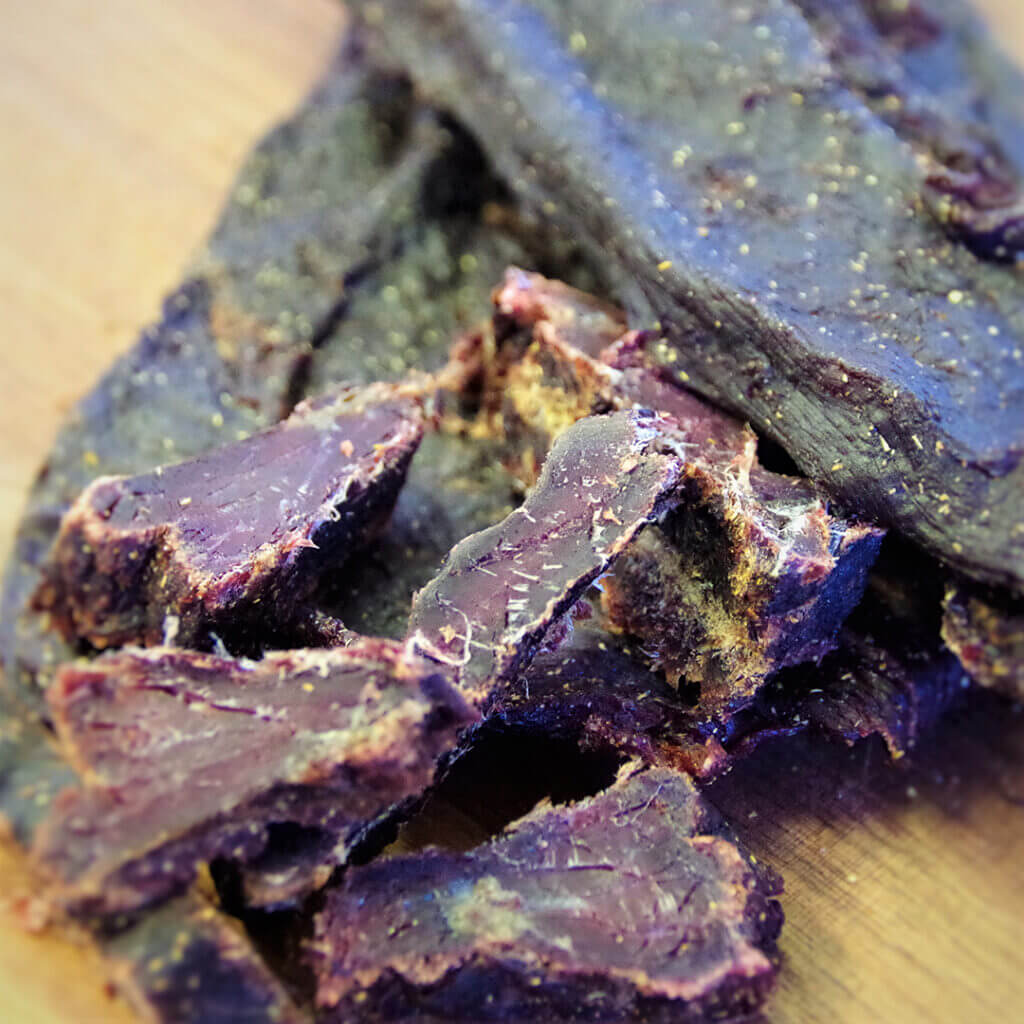
Moist biltong often has a slightly pink hue on the inside – a bit like a rare or medium rare steak – and the texture is soft and tender. Dry biltong which has been hung for longer tends to be a little chewier because the inside contains less moisture, whilst snapsticks are even dryer and crunchier.
Each product has its own unique texture and taste – but they all have that same savoury moreishness which has made biltong a universal favourite.
The textural diversity of biltong and jerky is one of the things that makes these two snacks so interesting and so delicious – so here’s a snapshot of all the differences covered in this guide.
| Jerky | Biltong |
Production process | Thin strips of meat, marinated in a variety of mixtures, then ‘cooked’ and dried over heat for short periods of time | Large chunks of beef, cured in a spice blend with vinegar and salt and air-dried naturally over several days |
Cuts of meat | Thin strips | Larger chunks, sliced after drying enable variable thickness and texture |
Texture | More uniform and consistent. Chewy, tough, dry and crispier | Adjustable textures from moist and soft to drier and harder. Generally more steak-like, tender and chewy
|
For more insights into the world of biltong and jerky, visit the DJays Gourmet website, check out our blog, find us on Facebook or follow us on Instagram @djaysgourmet.
As a general rule, yes. Biltong is air-dried naturally after curing in salt, vinegar and spices, which produces a texture closer to rare or medium-rare steak, tender and easy to bite, with a rich, savoury flavour. Jerky is marinated and dried using heat, which tends to produce a firmer, chewier, drier result. Both have their fans, and both are worth trying if you haven’t compared them side by side.
Moist biltong has a slightly pink interior, similar to rare steak, with a soft, tender texture. Dry biltong has been hung for longer and has less internal moisture, resulting in a slightly chewier, firmer bite. Snapsticks are even drier and crunchier than dry biltong. The core flavour profile is the same across all three. The difference is purely in texture and moisture level.
Jerky’s chewiness comes from a combination of factors: thin slices of meat dried over heat, which alters the protein structure; marinades containing sugar that caramelise slightly during drying; and the uniform thinness of the slices, which dries out consistently. Biltong uses larger chunks cured in simpler ingredients (salt, vinegar, spices) and air-dried without heat, resulting in a more varied, steak-like texture.
Yes. Jerky uses thin strips of meat, which dry quickly and evenly under heat, producing a consistent, uniform chew throughout. Biltong uses larger chunks that are sliced after drying, allowing for different thicknesses and therefore more variation in texture. The particular cut of beef used also plays a role, with leaner cuts typically producing a cleaner, firmer texture.
If you’re new to both, trying them side by side is the best way to understand the difference. DJays Gourmet produces both, so you can order and compare directly. If you prefer a softer, steak-like bite, start with moist biltong. If you’re after something firmer and chewier, traditional beef jerky is the place to start.

Arron Zamel has been General Manager of DJays Gourmet since 2015 and under his expert leadership, the company has cemented its reputation as Australia’s leading supplier of packaged jerky and biltong.
His strong family connection to South Africa, his marketing and management degree from Monash University, his technical expertise plus his experience as a successful entrepreneur and import/export business owner made him the ideal candidate for the challenging position.
Additionally, Arron’s innovative approach to management, his proven brand-building credentials, his strong customer focus and youthful energy have ensured that DJays Gourmet’s high-quality biltong and jerky have become Australia's dried meat treats of choice.
He understands traditional South African flavours and the precision techniques required to create truly authentic biltong, jerky and droewors (dried sausage). Part of his job is overseeing operations at DJays' purpose-built facility in Perth, WA where tons of Australian beef goes into making premium dried meat products each month for distribution to retail and wholesale customers across Australia.
For more insights into Arron’s world, visit the DJays Gourmet website, check out their Facebook page or follow them on Instagram @djaysgourmet.