Key things to know
Biltong and protein bars are both marketed as high-protein, post-workout or on-the-go snacks, but they differ significantly in ingredients, sugar content, and processing. Biltong offers comparable protein to leading protein bars (up to 59g per 100g) with fewer additives, minimal carbohydrates, and no artificial sweeteners. For people focused on clean eating or muscle recovery, biltong is worth a serious look.
You’re standing in a servo at 5pm, post-gym or mid-afternoon, and your options are a protein bar or a bag of biltong. Both are promising a protein hit. Both are shelf-stable and easy to eat. So which one actually earns its place in your bag?
We’ve done the comparison. Here’s what the numbers look like, and what the labels don’t always tell you.
Whether you’re recovering from a training session, trying to avoid the afternoon energy crash, or just keeping hunger under control between meals, protein is the macronutrient that earns its keep.
Unlike carbohydrates, protein digests slowly. That means steadier energy, longer-lasting satiety, and, for anyone who trains, the raw material your muscles need to repair and grow. After exercise, muscle fibres break down and need protein to rebuild. Iron supports oxygen delivery during recovery, zinc helps with cell repair, and B12 supports metabolism. A good post-workout snack covers these bases without loading you up with things you didn’t ask for.
The question is: which snack actually delivers?
Let’s put three products side by side at 100g each.
Dedicated high-protein bars (per 100g): the strongest performers on the shelf land around 45–50g of protein, with low carbohydrate and moderate saturated fat. These are the bars built specifically as a protein supplement.
General “protein” snack bars (per 100g): these sit closer to 25–30g of protein, but often carry 30g or more of carbohydrate and a much higher fat and energy figure. They’re marketed alongside the first group, and they’re a very different product.
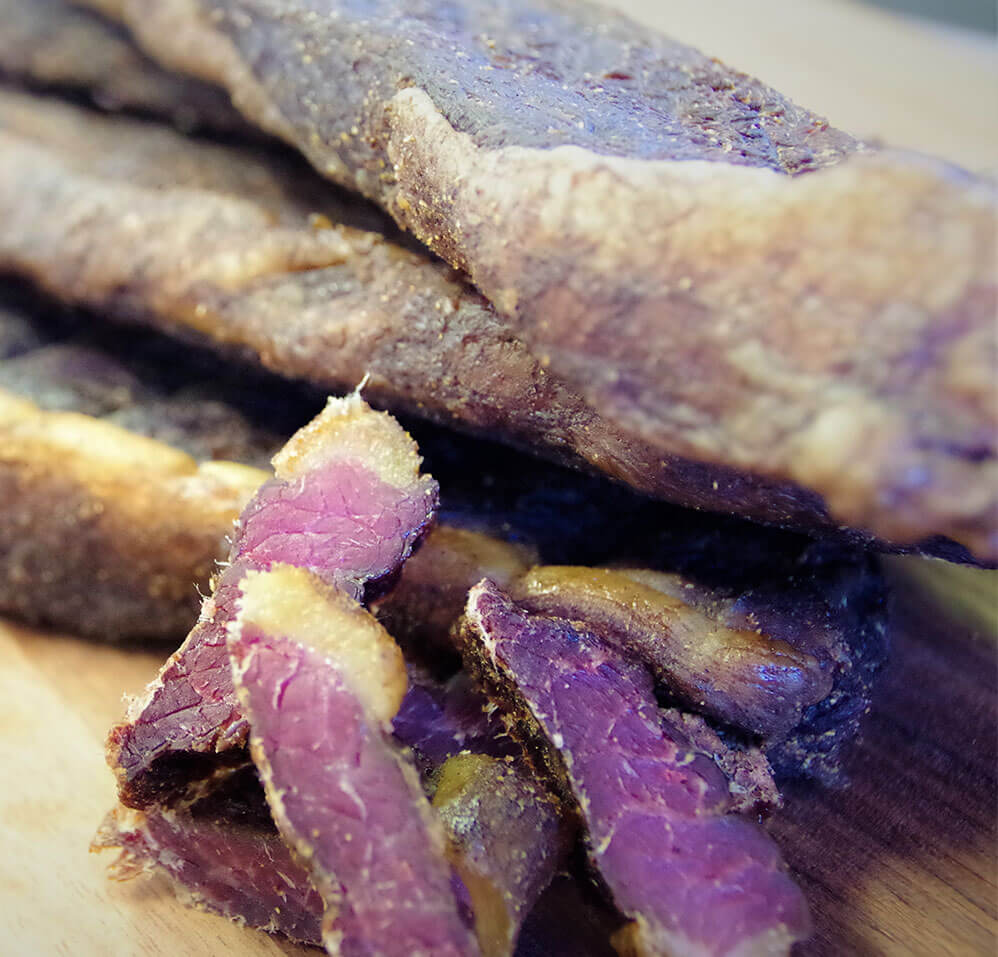
D.Jays Biltong (per 100g): up to 59g of protein, minimal carbohydrate, and a short ingredient list. Cured meat is naturally salty, so biltong is higher in sodium than a typical protein bar.
A few things stand out. Our biltong holds its own against the best dedicated protein bars on raw protein content, and comfortably beats the general snack bars, most of which are closer to a muesli bar than a protein supplement.
The sodium is worth noting. If you’re managing your salt intake, biltong is still a fine choice at normal serving sizes (most people eat 25–40g at a sitting, not 100g).
Macros only tell half the story. The other half is the ingredient list.
A quality protein bar needs to hit its protein targets somehow. That usually means protein isolates and concentrates, binding agents, emulsifiers, artificial or natural flavours, and often a sweetener like sucralose or maltitol to keep the sugar count down while still tasting like a treat. There’s nothing necessarily dangerous about any of these things, but they’re worth knowing about.
D.Jays biltong ingredients: Australian beef, vinegar, salt, spices. That’s it. No emulsifiers, no binding agents, no sweeteners, no flavours derived from a lab. Just beef and the same cure recipe we’ve been using since 1985.
For people who care about keeping their diet clean and readable (whether that’s a paleo, carnivore, or just a “no-weird-stuff” approach), that simplicity has real appeal. See also: Just beef and spice: why biltong and jerky belong in a clean eating pantry.
We’ll be careful here, because recovery is a complex process and no snack is a magic fix.
What we can say is that biltong contains several nutrients that play a role in the recovery process:
Many protein bars contain similar nutrients, though often in supplemented rather than naturally occurring form. The difference is that biltong gets there through whole food rather than a manufacturing process.
The anabolic window (the period after exercise when your body is primed to use protein) is generally considered to be a few hours post-workout. A serve of biltong in that window is a practical, convenient, and genuinely nutritious option. It won’t replace a full meal, but it doesn’t need to.
This one’s close to a draw. Both biltong and protein bars are:
If anything, biltong has a slight edge in resealability once you’ve opened the bag, and it doesn’t get the kind of chocolate-melt problem that can ruin a protein bar on a warm day in a gym bag.
Protein bars vary widely in price, but quality bars typically run $3–$5 each. A serve of biltong (around 25–30g) works out to a comparable cost per gram of protein, often less, especially if you buy in bulk.
It’s worth doing the maths on your regular snack. The per-100g comparison often favours biltong.
The honest answer is: it depends what you’re after.
Biltong is likely the better fit if you:
A protein bar may suit you better if you:
For most people most of the time, biltong holds its own, and often comes out ahead. Try our biltong range and see how it fits your routine.
D.Jays biltong contains up to 59g of protein per 100g. That is comparable to (and often ahead of) a dedicated high-protein bar, which typically lands around 45–50g per 100g, and well ahead of general-purpose “protein” snack bars, which are usually closer to 25–30g per 100g.
Biltong contains protein, iron, zinc, and B12, all nutrients that play a role in muscle recovery and repair. Many people find it a practical post-workout snack, though it’s best as part of an overall diet that supports your training, not a standalone solution.
Biltong is lower in calories, carbohydrates, and saturated fat than many protein bars, which may make it useful if you’re managing calorie intake. Protein also supports satiety, so a serve of biltong may help you feel fuller for longer between meals. Individual results vary.
D.Jays biltong is made from Australian beef, vinegar, salt, and spices. No artificial additives, emulsifiers, or sweeteners. Many protein bars include processing aids and flavours not present in biltong.
A typical serve is 25–40g, which delivers roughly 15–24g of protein. This is a reasonable post-workout snack alongside other food. Athletes with higher protein needs may eat more, but most people find a small serve genuinely satisfying.

Arron Zamel has been General Manager of DJays Gourmet since 2015 and under his expert leadership, the company has cemented its reputation as Australia’s leading supplier of packaged jerky and biltong.
His strong family connection to South Africa, his marketing and management degree from Monash University, his technical expertise plus his experience as a successful entrepreneur and import/export business owner made him the ideal candidate for the challenging position.
Additionally, Arron’s innovative approach to management, his proven brand-building credentials, his strong customer focus and youthful energy have ensured that DJays Gourmet’s high-quality biltong and jerky have become Australia's dried meat treats of choice.
He understands traditional South African flavours and the precision techniques required to create truly authentic biltong, jerky and droewors (dried sausage). Part of his job is overseeing operations at DJays' purpose-built facility in Perth, WA where tons of Australian beef goes into making premium dried meat products each month for distribution to retail and wholesale customers across Australia.
For more insights into Arron’s world, visit the DJays Gourmet website, check out their Facebook page or follow them on Instagram @djaysgourmet.