Key things to know
Biltong is one of the most iron-dense, convenient snacks available: a 30g serving of lean beef biltong provides around 35% of the recommended daily intake of iron for adult males. This article covers why iron matters, the difference between haem and non-haem iron, and why a handful of biltong beats most powders and supplements for a natural, whole-food iron hit. If you’re looking for easy ways to boost your iron intake, biltong belongs on your shortlist.
Many of us are iron-deficient – in fact, it is thought that up to 5% of the Australian population has iron deficiency anaemia. But what does this mean for our health and wellbeing and how can we avoid becoming iron-deficient?
Iron plays a crucial role in our physical and mental health.
Without sufficient iron, our bodies can’t make haemoglobin – the protein in red blood cells which is necessary for the transport of oxygen from the lungs. If we become iron-deficient or anaemic, our body isn’t able to make enough healthy red blood cells which can lead to symptoms like extreme fatigue, breathlessness, heart palpitations, muscle cramps and spasms, cold intolerance, tinnitus, disturbed sleep and dizziness.
Iron also supports our immune system, energy production and muscle function so we really need to make sure that we keep our iron levels up.
According to Nutrition Australia, the recommended daily intake of iron for men over the age of 19 is 8mg per day and 18mg for females over 19. Women in their reproductive years have a much higher iron requirement than men.
Surprisingly, while the human body can store iron, it can’t make it, so it’s crucial we that get sufficient quantities of this essential mineral through our diet.
Thankfully, iron is found in a variety of foods – but it is important to understand that there are two forms of iron depending on the food source (ie plant or animal). These two types have different characteristics and absorption rates.
According to the Red Cross, you absorb up to 30 percent of the haem iron that you eat and between two and 10 percent of the non-haem iron that you consume. While a balanced diet is important, eating meat generally boosts your iron levels far more than eating non-haem iron and you may not be getting sufficient iron if you follow a vegetarian or vegan diet.
We’ve created a useful list of iron-rich foods to help you make healthy choices. We’ve also given you some ideas for tasty, convenient snacks like biltong that will provide a good source of haem iron.
In fact, keeping a packet of beef biltong in your sports bag, car console, pantry or workplace is one of the best things you can do to top up with essential iron. This dried meat treat is the ultimate in convenience and the perfect iron boost for healthy bodies and minds, plus it’s packed with other essential nutrients like zinc and Vitamin B12.
Top tip: Iron is absorbed more easily when combined with vitamin C sources (eg tomatoes, yellow peppers, capsicum, citrus fruits, strawberries), so try and mix and match food types whenever possible to give your body an optimum boost.
Below is a comprehensive list of food types that are rich in haem iron, along with some examples:
Lean meat: Beef, lamb, pork, kangaroo, veal, ham, venison, beef biltong, jerky
Organ meats/offal: Liver (especially chicken liver and lamb liver) kidneys, chicken-liver pate, tongue, oxtail
Poultry: Chicken, turkey, eggs
Fish and shellfish: Salmon, tuna, sardines, clams, oysters, mussels, scallops, prawns
Note that the darker colour of the meat or fish, the higher the haem iron levels. For example, a beef steak is richer in iron than a pork chop, a chicken leg is better for iron content than the breast and salmon is a healthier iron choice than trevally or whiting.
Plant food types (with some examples) that are rich in non-haem iron include:
Nuts: Cashews, almonds, pistachios, macadamia nuts, pine nuts
Seeds: Pumpkin seeds, sesame seeds, hemp seeds
Leafy greens: Spinach (also rich in Vitamin C), Swiss chard, silverbeet, broccoli, kale, string beans, cabbage, brussels sprouts
Pulses and legumes: Soybeans, cannellini beans, kidney beans, lentils, chickpeas, baked beans, edamame beans, tofu
Fresh fruit: Watermelon, dates, strawberries, figs
Dried fruit: Apricots, raisins, prunes, peaches
Fortified cereals: Choose products with added iron eg Uncle Toby’s with iron
Enriched bread: Wholegrain bread, seed bread, rye bread
Pasta and rice: Look for iron-enriched products
Dark chocolate: Yes, dark chocolate is a source of iron – in moderation of course – and make sure it contains at least 70% cocoa
Top tip: Tannins contained in tea and coffee can hinder the body’s absorption of iron, so avoid having a cuppa with your iron-forward meal or snack.
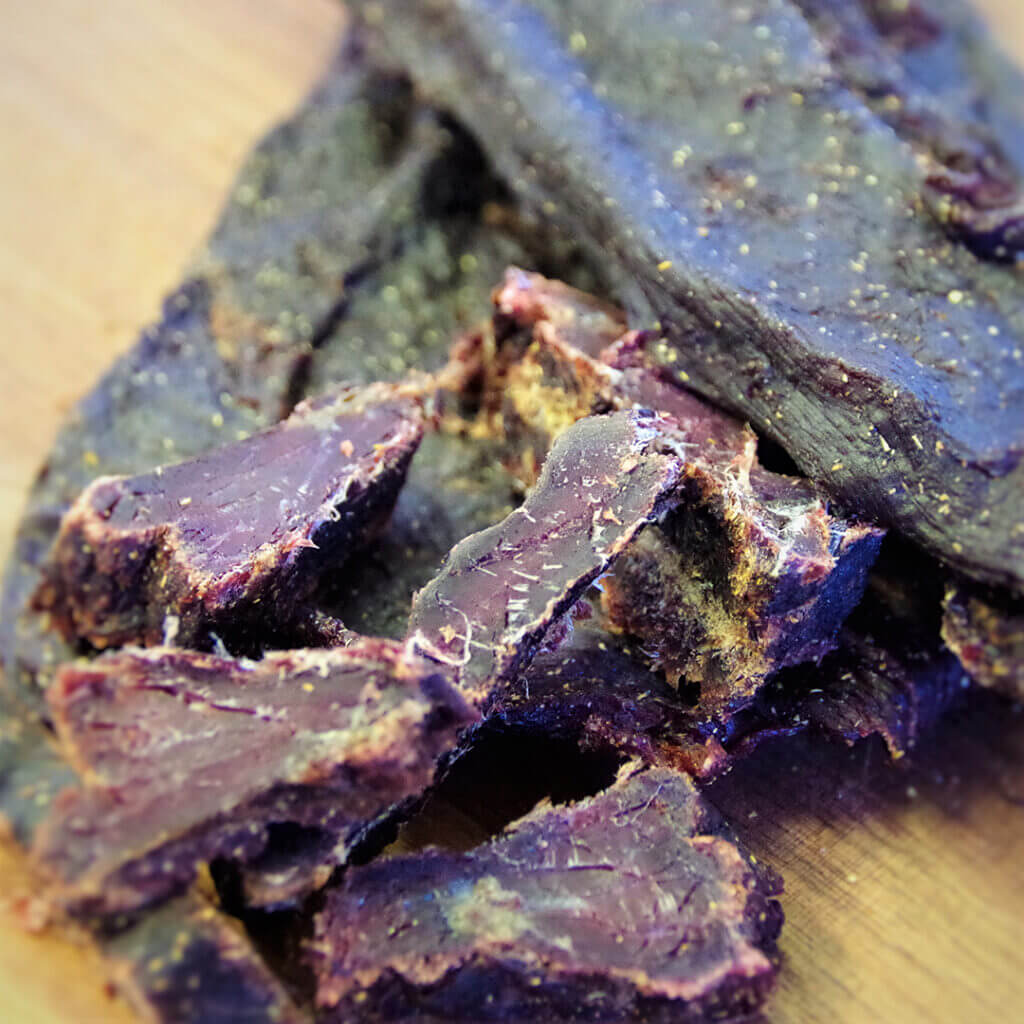
As mentioned earlier, beef biltong is arguably the very best snack for a meaningful dose of vital iron.
A 30g serving size of lean beef biltong contains around 35% of the RDI of iron for an adult male, plus it’s packed with plenty of other healthy nutrients like zinc, choline, B-vitamins including B12 and B9 (folate), magnesium, potassium, and phosphorus.
Of course, there are other snacks that contain iron like fortified cereal and protein bars, nuts, dried fruit, hard-boiled eggs, a piece of fruit or even a dollop of formulated iron powder in a smoothie, but nothing really beats the authentic nourishment that comes from naturally iron-rich biltong.
Remember too that biltong is a whole-food product, made from all-natural ingredients so it trumps powders, supplements and processed foods every time. Plus it’s convenient, it can be stored without needing refrigeration and eaten anywhere, anytime which is why it deserves a spot on the list of iron-rich foods to include in your daily diet.
Remember to buy biltong from a reputable manufacturer like DJays Gourmet so that have the peace-of-mind there are no added nasties – just pure natural goodness for ironmen, ironwomen and ironchildren!
Visit DJays Gourmet to order Australia’s best biltong, delivered to your door.
A 30g serving of lean beef biltong contains around 35% of the recommended daily intake (RDI) of iron for adult males. Biltong is a haem iron source, which means the body may absorb it more efficiently than iron from plant foods. Research suggests up to 30% of haem iron is absorbed, compared to just 2–10% for non-haem iron.
Yes. Beef biltong is classified as a haem iron food, putting it in the same category as lean red meat, organ meats and seafood. Because it’s air-dried rather than heavily processed, the natural iron content of the beef is retained. It also delivers zinc, B12, folate, magnesium, potassium and phosphorus in a single snack.
Haem iron comes exclusively from animal products and is absorbed more readily by the body. Non-haem iron comes from plant foods like spinach, legumes and fortified cereals, but is absorbed at a lower rate. According to the Red Cross, the body may absorb up to 30% of haem iron eaten, versus 2–10% of non-haem iron.
Tea and coffee contain tannins that can hinder the body’s absorption of iron, so it’s worth avoiding a cuppa with an iron-rich meal or snack. Vitamin C, on the other hand, may help improve non-haem iron absorption. Pairing plant-based iron foods with citrus or capsicum can be a useful strategy.
According to Nutrition Australia, the recommended daily intake of iron for females over 19 is 18mg per day, compared to 8mg for males over 19. Women of reproductive age have significantly higher iron requirements, making iron-rich food choices particularly important.

Arron Zamel has been General Manager of DJays Gourmet since 2015 and under his expert leadership, the company has cemented its reputation as Australia’s leading supplier of packaged jerky and biltong.
His strong family connection to South Africa, his marketing and management degree from Monash University, his technical expertise plus his experience as a successful entrepreneur and import/export business owner made him the ideal candidate for the challenging position.
Additionally, Arron’s innovative approach to management, his proven brand-building credentials, his strong customer focus and youthful energy have ensured that DJays Gourmet’s high-quality biltong and jerky have become Australia's dried meat treats of choice.
He understands traditional South African flavours and the precision techniques required to create truly authentic biltong, jerky and droewors (dried sausage). Part of his job is overseeing operations at DJays' purpose-built facility in Perth, WA where tons of Australian beef goes into making premium dried meat products each month for distribution to retail and wholesale customers across Australia.
For more insights into Arron’s world, visit the DJays Gourmet website, check out their Facebook page or follow them on Instagram @djaysgourmet.